

Workers' Compensation

Workers Compensation Publication Cover

Injured workers face significant hurdles in navigating the workers' compensation system. Many don't receive adequate medical care of other benefits and are threatened with job loss. LOHP publishes educational materials, offers training workshops for labor and community leaders and activists, provides consultation services to labor and community organizations and conducts research about experiences in the workers' compensation system.

For additional workers' compensation resources, click here.

Educational Materials

MODEL TOOLS AND INSTRUCTIONS FOR COMMUNITY HEALTH CENTERS

More than five million persons are employed in low-wage or underground-economy jobs in California. Many of these workers sustain injuries and illnesses because of the hazardous nature of their jobs. Typically, it has been difficult for community health centers, which serve as safety net providers, to treat patients with work-related injuries and illnesses. The health centers commonly see injured workers whose employers may be illegally uninsured for workers’ compensation, do not inform their employees about the right to receive workers’ compensation benefits, or do not arrange for injured employees to receive workers’ compensation medical care. LOHP has collaborated with the Watsonville Law Center to produce the booklet, Providing Medical Services to Low-Wage Workers with Job Injuries, 2012, to help community health centers create a financially sustainable program to treat patients with work-related injuries and illnesses.

BOOKLET FOR INJURED WORKERS WHOSE EMPLOYERS ARE ILLEGALLY UNINSURED

Online versions are available (see below). Printed copies may be obtained by contacting the Commission on Health and Safety and Workers’ Compensation, California Department of Industrial Relations.

If Your Employer Is Illegally Uninsured, English version, 2011 (PDF)

If Your Employer Is Illegally Uninsured, Spanish version, 2011 (PDF)

POCKET GUIDE TO WORKERS’ COMPENSATION

Pocket Guide to Workers’ Compensation: Public and Private Sectors, 2011, is a booklet that gives an overview of California law and procedure, with citations to applicable laws, regulations, and precedent cases. It covers labor-management carve-outs, rights of employees whose employers are illegally uninsured, and how workers’ compensation law relates to disability rights laws, job-protected leave laws, and public benefits. Also included are pertinent resources, a glossary, and an index of terms. The pocket guide was published by California Public Employee Relations , Institute for Research on Labor and Employment, UC Berkeley.

FACTSHEET ABOUT OTHER BENEFITS

The factsheet, For Workers’ Compensation Clients: Facts About Other Benefits in California, 2011, discusses the interplay between workers’ compensation benefits and state disability insurance, state unemployment insurance, U.S. Social Security benefits, and Medicare and Medi-Cal benefits. The factsheet was prepared for Worksafe, Inc. The intended audience is injured workers seeking advice from legal aid offices.

Return-to-Work Booklet

LOHP's booklet, Returning to Work after a Job Injury: Tools for Injured Workers and Unions, 2007, is available in English, Spanish and Chinese. It includes information and resources that can be used to negotiate with employers to allow injured workers to return to work. The booklet demonstrates how employers can save money, avoid fines and penalties, and increase overall health, productivity and competitiveness of their businesses by designing and implementing effective return-to-work programs. also included are descriptions of additional resources and references to applicable laws and regulations.

English Version of Return-to-Work Booklet, 2007 (PDF)
Spanish Version of Return-to-Work Booklet, 2007 (PDF)
Chinese Version of Return-to-Work Booklet, 2008 (PDF)

RETURN-TO-WORK HANDBOOK

Two additional return-to-work publications are available. The handbook, Helping Injured Employees Return to Work: Practical Guidance Under Workers’ Compensation and Disability Rights Laws in California, 2010, discusses how to establish and implement an effective return-to-work program, coordinate the return-to-work process with the injured employee’s workers’ compensation benefits, and ultimately strengthen the work environment and overall health of the company or organization. The handbook provides guidance primarily for small business employers. For employees of small businesses, the handbook describes the goals and benefits of returning to work, everyone’s roles and responsibilities, and what can be expected in the process. Larger employers and their employees may also find this handbook useful.

The four-page factsheet, Best Practices in Returning an Injured Employee to Work, describes six basic steps that constitute best practices to help an employee with a work-related injury or illness return to work.

The handbook and factsheet were prepared by UC Berkeley’s Institute for Research on Labor and Employment, with funding and support from the Commission on Health and Safety and Workers’ Compensation. Both are available online (see below). Printed copies of the handbook may be obtained by contacting the Commission.

Return-to-Work Handbook, 2010 (PDF)
Return-to-Work Factsheet, 2010 (PDF)

Workers' Compensation Guidebook

Workers' Compensation in California: A Guidebook for Injured Workers, 3rd Edition, 2006, is available in English and Spanish. The guidebook gives and overview of the California workers' compensation system as of November 2006. It covers basic legal rights, steps to take to request workers' compensation benefits, medical care, resolving problems, temporary disability and permanent disability benefits, working for your employer after injury, benefits when you need to change jobs, and where to seek further information and help if necessary. Also included are a resource list, references to important laws and regulations, and a glossary.

The guidebook was produced with funding and support from the California Commission on Health and Safety and Workers' Compensation. Online versions are available (see below). Printed copies may be obtained by contacting the Commision.

Three articles written since 2006 update some of the information in the guidebook. The 2011 update describes new medical treatment guidelines. The 2008 update discusses how injured workers injured in 2008 or later may receive temporary disability (TD) benefits over the course of five years instead of two years. The 2007 update discusses how injured workers who have the right to predesignate their personal physician may also predesignate a medical group.

2011 Update (PDF)
2008 Update (PDF)
2007 Update (PDF)
English Version of Guidebook, 2006 (PDF)
Spanish Version of Guidebook, 2006 (PDF)

Carve-Outs Booklet

Labor unions and employers in California are permitted to "carve out" alternative systems for delivering benefits to inured workers and resolving problems and disputes. Creating a carve-out can help avoid the delays, excessive costs, and adversarial interactions that often characterize the state system.

LOHP's booklet, How to Create a Workers' Compensation Carve-Out in California: Practical Advice for Unions and Employers, 2006, discusses issues to consider in designing a carve-out and ensuring success. Topics include reasons to create a carve-out, eligibility requirements, identifying problems and goals, designing the carve-out to meet your goals, hiring the best people, and staying involved in the operation of the carve-out.

Carve-Outs booklet, 2006 (PDF)

Introductory Video

LOHP's 16-minute video, Introduction to Workers' Compensation, 1998, explains the California workers' compensation system in clear, non-technical language. It explains workers' rights, responsibilities, and procedures to follow. The video is intended for all workers, whether or not they have a job injury. It was produced with funding and support from the California Commission on Health and Safety and Workers' Compensation.

The video and a transcription of it can be viewed online at the Commission's website. Click here.

Training Workshops

Workers' Compensation Navigator Training Workshops

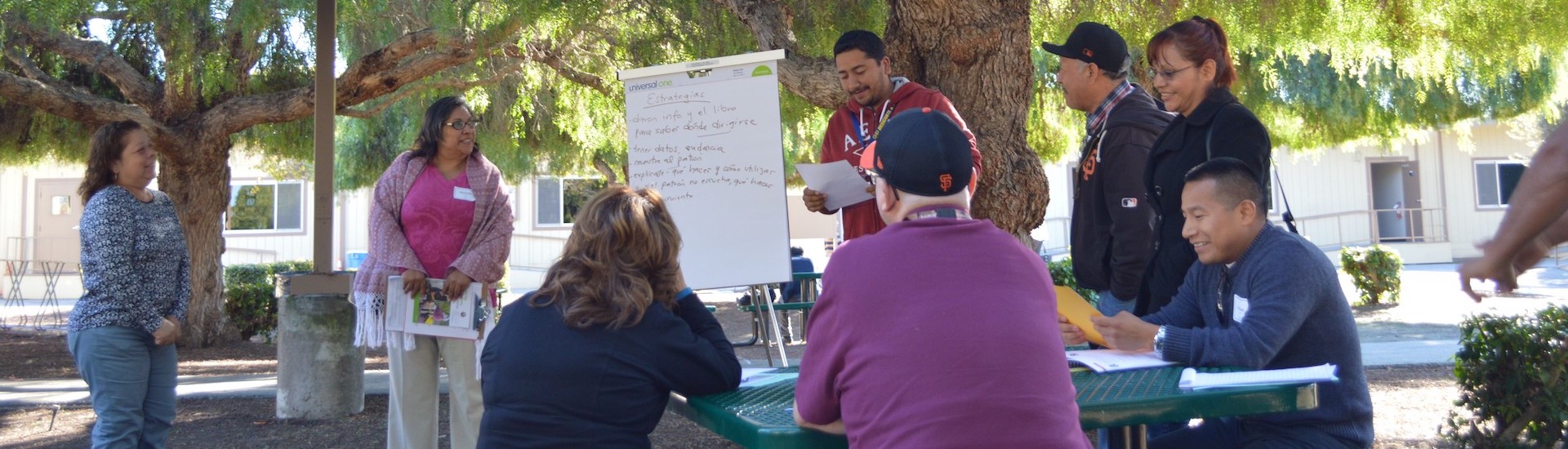
LOHP conducts a two-day intensive training workshop for labor and community activists to enable them to:

  • Educate injured workers on how to exercise their rights and obtain necessary care
  • Strengthen organizing and collective bargaining strategies for injured workers
  • Help promote policies to protect injured workers' rights and improve access to services

The workshop covers major aspects of the California workers' compensation system, resources in the community, and strategies for protecting workers' rights. It is geared for leaders and activists, including shop stewards, health and safety committee members, regional organizing committee members, staff, and elected officials.

Our next workshop will be held in 2013. If you have any questions please contact Sheela Jhaveri at sheelaj@berkeley.edu or 510-642-5507.

For Navigators Only

If you have completed the workshop, click here for information for Navigators (password required).

Union training

LOHP can provide training in workers' compensation that is tailored for individual unions and other organizations. To discuss training for your organization, contact Laura Stock at lstock@berkeley.edu.

Consultation Services

LOHP can provide consultation services in workers’ compensation for labor and community organizations. Currently, LOHP is assisting Watsonville Law Center in a project to equip a local community health center with the proper tools and training to provide workers’ compensation medical care to low-wage workers who are unable to obtain necessary care through their employers, and to obtain reimbursement for the medical services.

To discuss consultation services for your organization, contact Attorney and Industrial Hygienist Juliann Sum, jsum@berkeley.edu.

Research

LOHP conducts research about the workers' compensation system and advises policymakers. The studies listed below were conducted with funding and support from the California Commission on Health and Safety and Workers' Compensation.

Return-to-Work in California: Listening to Stakeholders' Voices, 2001, describes the experiences of injured workers, claims administrators, union representatives, managers, and health care providers with the return-to-work process. To view the report online, click here.

Navigating the California Workers' Compensation System, 1996, describes injured workers' experiences with seeking information and help with their claims. It documents why workers need clear information about laws and procedures. Its findings led LOHP and the Commission to develop the guidebook and video listed above. To view this report online, click here.